
Route one
Keep the heat you already have
Evaporation takes about 70% of a pool's heat, and a cover is the only cheap thing that stops it. Start here, whatever else you end up buying.

Honest solar pool cover and pool heating advice: every temperature, cost and payback figure worked out from published physics and current energy prices, with the arithmetic left on the page where you can check it.
In the order they are worth trying, which is not the order the industry sells them in. Keeping heat is cheaper than making it, and knowing the number is cheaper than both.
Evaporation takes about 70% of a pool's heat, and a cover is the only cheap thing that stops it. Start here, whatever else you end up buying.
Solar, heat pump, gas or propane, priced per million BTU delivered into the water. The spread between the cheapest and the dearest is five to one.

How much energy your pool actually needs, how long your heater will take, and whether a cover pays for itself. Formulas shown, not asserted.
The four purchases that do the most for a cold pool, in order of how much they change per dollar spent. Each links to the page that explains why it is there.
Most pools, most budgets — the default recommendation
Check price on AmazonWhy this one →Any inground pool with a cover you are not using enough
Check price on AmazonWhy this one →Adding real heat with no running cost, on a sunny site
Check price on AmazonWhy this one →Lowest running cost per degree when you want real temperature control
Check price on AmazonWhy this one →#ad We earn a commission if you buy through this link, at no extra cost to you. It never changes the ranking. How this site is funded. Prices last checked September 2, 2026.
Both of them are telling the truth. They are measuring three different things and calling all of them the same thing: daytime solar gain, overnight retention, and where the pool settles after a week. A buyer who reads three of these pages comes away with a four-degree answer, a ten-degree answer and a fifteen-degree answer, and no way to tell which one applies to his pool.
Every buying guide in this category says it tested twenty covers over a summer. We have not tested any, and we say so. What we did instead is read the published specifications, apply the Department of Energy’s own pool-energy figures, and show every calculation on the page — so you can re-run it on a phone and catch us if we are wrong.
Here is the whole reconciliation, including why a thermometer reading taken right after you pull the cover off is not your pool temperature.
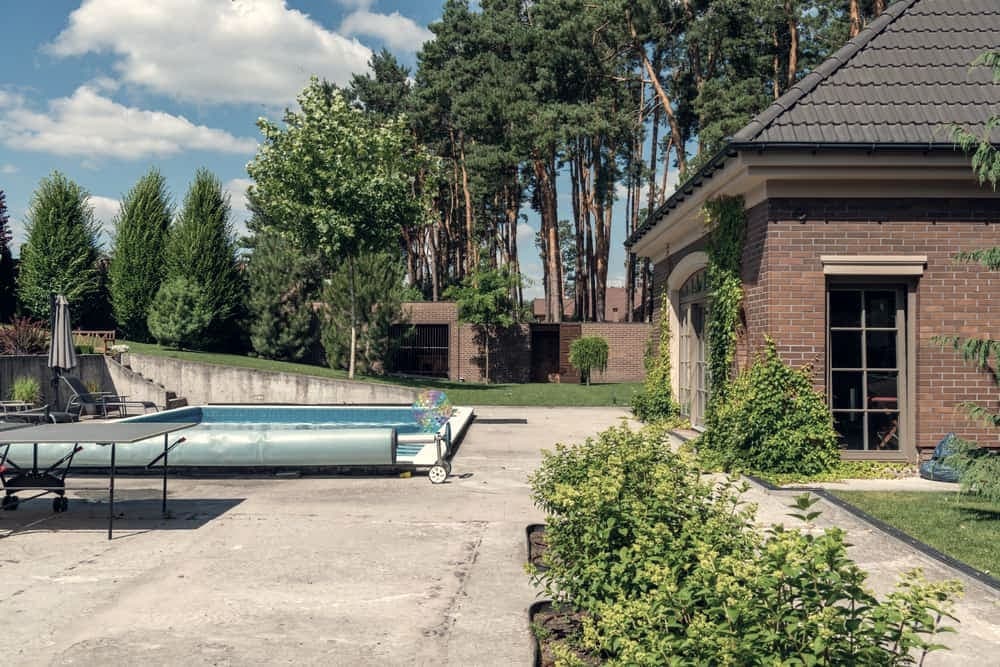
What a solar cover really does to your water temperature, why the published figures range from 4 to 15 degrees, and which cover is worth buying.
Solar, heat pump, gas or propane, priced per million BTU delivered into the water at current US energy prices. The numbers are not close.

Pool heating cost per degree, per month and per season, computed from current EIA fuel prices with the formula shown every time.

Target temperatures from DOE, how much heat a pool loses overnight and what that costs, and the practical ways to stretch the season.

Heating time, running cost and cover savings, computed for your pool with the formula and assumptions printed alongside the answer.
Every generic answer in this subject is wrong for almost everybody, because the only inputs that matter are yours. These take your numbers and do the arithmetic in front of you.

Enter your gallons, the rise you want and your heater's rating. Handles the gas-versus-heat-pump rating trap and prints the whole calculation.
Prices the same heating job across solar, heat pump, gas, propane and electric resistance simultaneously, with every energy price and efficiency editable.

Turns your pool's overnight temperature drop into a saving per night, per season, and a payback period — the calculation nobody in this category publishes.

The 4-degrees-versus-15-degrees contradiction that runs through this entire category, reconciled from published physics. Three different quantities being reported as one.
The complete walkthrough: what your pool actually needs in BTU, every heating option priced per delivered million BTU, and the order to try them in.
The complete cost model: what a million BTU costs to deliver with each fuel, what that means per degree and per pool size, and why heat-up cost is not your monthly bill.
Evaporation, radiation, convection and conduction, with the arithmetic on what each night actually costs and a measurement you can take yourself.
Cheapest to buy is a cover. Cheapest to run is solar, then a heat pump. The arithmetic for both, and a spending order that works at any budget.

Thickness buys years, not degrees. The published lifespan tiers, the cost per year of service, and the case for 12 mil on a large pool.